The Best RFID Readers in 2026
Recommendations for professionals in warehousing and logistics
In this comparison, we show you what really matters in professional RFID readers in 2026. Whether it's inventory in the warehouse, tool management in production or container management in logistics – we provide you with practical decision-making assistance with specific recommendations.
First things first: The best RFID scanner is not the one with the most features, but the one that best suits your RFID tags, your environment and your processes. Our top recommendations for 2026 are the Datalogic PowerScan 9600 RFID for hybrid applications, the Honeywell CT70 as a powerful all-in-one mobile computer and the Zebra RFD90 for maximum range and speed.
What makes a professional RFID reader 2026?
In 2026, a professional RFID scanner will be much more than just a tool for reading data: it will have to bridge the gap between physical objects and digital systems – reliably, accurately and in such an integrated way that it really speeds up your process.
The right frequency
UHF (Ultra High Frequency) is the standard for warehousing and logistics. Thanks to large reading ranges of several metres, hundreds of RFID transponders can be read simultaneously (batch reading) in a matter of seconds.
HF (High Frequency) scores highly in production and logistics with very good read rates at short distances – for example, in workpiece or container management with clearly defined reading zones. In addition, HF works more reliably when metal or liquids near the tag influence the RFID signal.
Reading performance tailored to the application
The reading range must be suitable for the process – from close range to detection in high racks. Anti-collision procedures ensure that many tags can be read without interfering with each other. Stable read rates during movement are essential when employees walk along the rack with the RFID reader, work on the ramp or record material on the line.
Configurability for precise results
Professional devices can be specifically adjusted to the environment and process. This includes parameters such as transmission power, session or Q value, as well as filter logic that allows you to read only relevant tags and avoid over-reading. It is equally important to structure data sensibly on the device itself: EPC filters, whitelists and deduplication ensure that downstream systems receive clear, unambiguous data records – instead of being slowed down by duplicates and ‘ghost reads’.
Robustness for continuous use
A professional RFID reader must be able to withstand everyday use in warehouses, production facilities and outdoor areas on a permanent basis. Appropriate IP protection classes, temperature ranges and vibration and shock resistance are essential. In addition, EMC stability in industrial environments (motors, metal surfaces, Wi-Fi) is required to ensure reliable detection even in the presence of sources of interference. And because RFID is often used in long shifts, a well-designed battery concept is a real productivity factor – ideally with a replaceable battery or hot swap.
Modern wireless connections
Because RFID now usually interacts with ERP, WMS or MES in real time, stable and fast connections are required. Wi-Fi and Bluetooth are standard, while 4G/5G enables flexible data transmission even outside traditional hall coverage or in large areas. The better the connection, the smoother the booking, reconciliation and process feedback directly at the point of action.
Efficient security and integration
A professional reader is also an IT asset that must be operated securely and managed properly. Compatibility with an MDM is crucial for rolling out devices, standardising settings, managing updates and providing efficient support. To ensure that data flows directly into your systems, you need well-documented SDKs and APIs that are compatible with modern platforms and can be integrated securely and stably into your IT landscape.
Reliable operation for many years
Ultimately, it is not just the purchase price that matters, but the total cost of ownership. The availability of batteries, holsters, chargers and spare parts, clearly defined replacement processes and repairable hardware reduce downtime and keep operating costs low. Equally important is reliable manufacturer or partner support, so that updates, repairs and replacement devices can be carried out quickly and predictably in an emergency.
For which processes is a mobile RFID reader ideal?
Mobile RFID readers are most useful where flexibility is required and stationary gates are not practical. An employee with a handheld device can scan shelves, containers or load carriers directly on site – without fixed infrastructure and without visual contact with the individual tag.
Storage processes
| Application | Benefits |
|---|---|
| Inventory | Record hundreds of items simultaneously (batch scanning) – even if they are packed in boxes or high up on shelves |
| Goods receipt | Quickly check incoming deliveries without individual scanning |
Production processes
| Application | Benefits |
|---|---|
| Tool management | Use RFID scanning to immediately see whether all the tools you need are available, complete and ready for use – no more searching |
| Work in progress and material tracking | Complete traceability of raw materials, semi-finished products and finished products throughout the entire manufacturing process |
| Quality control | Documentation of test steps directly on the product, linked to serial numbers |
Logistics processes
| Application | Benefits |
|---|---|
| Shipping | Quickly record individual products in cartons before shipping |
| Truck loading | When loading at the ramp, ensure that each pallet ends up in the correct truck – avoid incorrect loading |
| Container management (RTI) | Record reusable containers, mesh boxes, pallets and roll containers – document inventory, circulation, location and responsibilities |
Top recommendations for 2026: The best RFID readers
The following device recommendations are based on proven solutions from practical experience and cover a range of requirements in warehousing, production and logistics. They show which RFID readers will stand out in 2026 thanks to their reliable performance, robust design and high suitability for everyday use.
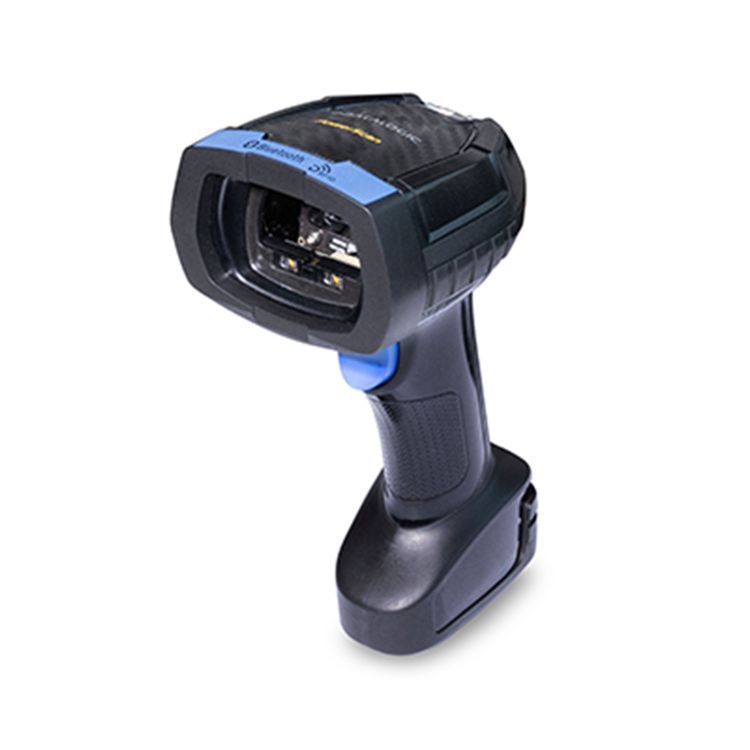
Datalogic PowerScan 9600 RFID
The PowerScan series is legendary for its durability. The RFID version combines first-class barcode scanning with RFID technology.
- Reads UHF RFID plus 1D/2D, OCR and more
- Very robust: IP65/IP67, drop-proof up to 2.5 m, wide temperature range
- Wireless operation with Bluetooth 5.0 and wireless charging
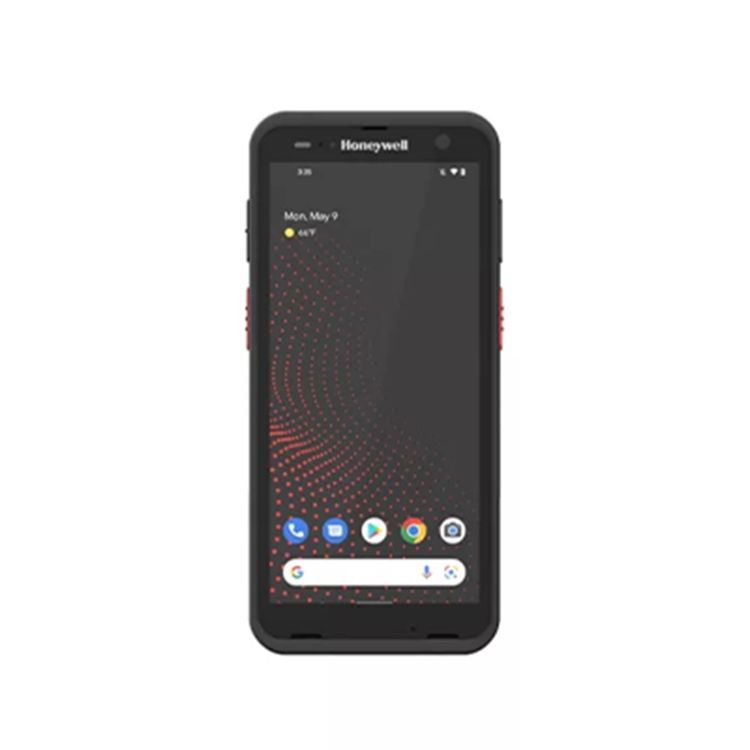
Honeywell CT70
The Honeywell CT47 sets standards in terms of performance and ergonomics for mobile use.
- Data capture with RFID and 1D/2D barcodes and optional DPM
- Future-proof Android operating system, upgradeable to version 19
- Industrial-grade: IP65/IP68, with protective cover up to 2.4 m drop-proof
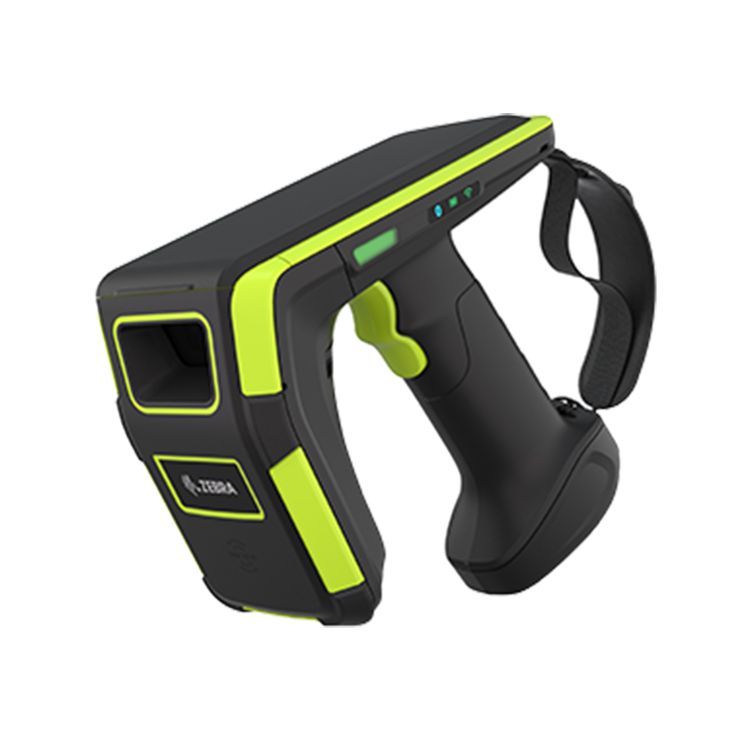
Zebra RFD90
The Zebra RFD90 is a robust, top-of-the-range RFID sled that transforms conventional mobile computers into powerful RFID scanners.
- High-performance UHF reader: up to 1,300 tags per second.
- Two range options depending on the model: up to 6.7 m or up to 22.9 m
- Modern connectivity: Bluetooth 5.3 and Wi-Fi 6, easy pairing via NFC
The right RFID reader for your application
Choosing the right RFID reader is an investment in clean data, reliable inventory and consistent processes – from goods receipt to production to dispatch. This overview is intended to serve as a guide and decision-making aid. If you would like to evaluate your application in detail, define the right combination of RFID reader, RFID transponders and software, or compare and test solutions in real-world use, our experts will be happy to assist you – from selection and piloting to successful integration into your existing IT landscape.